
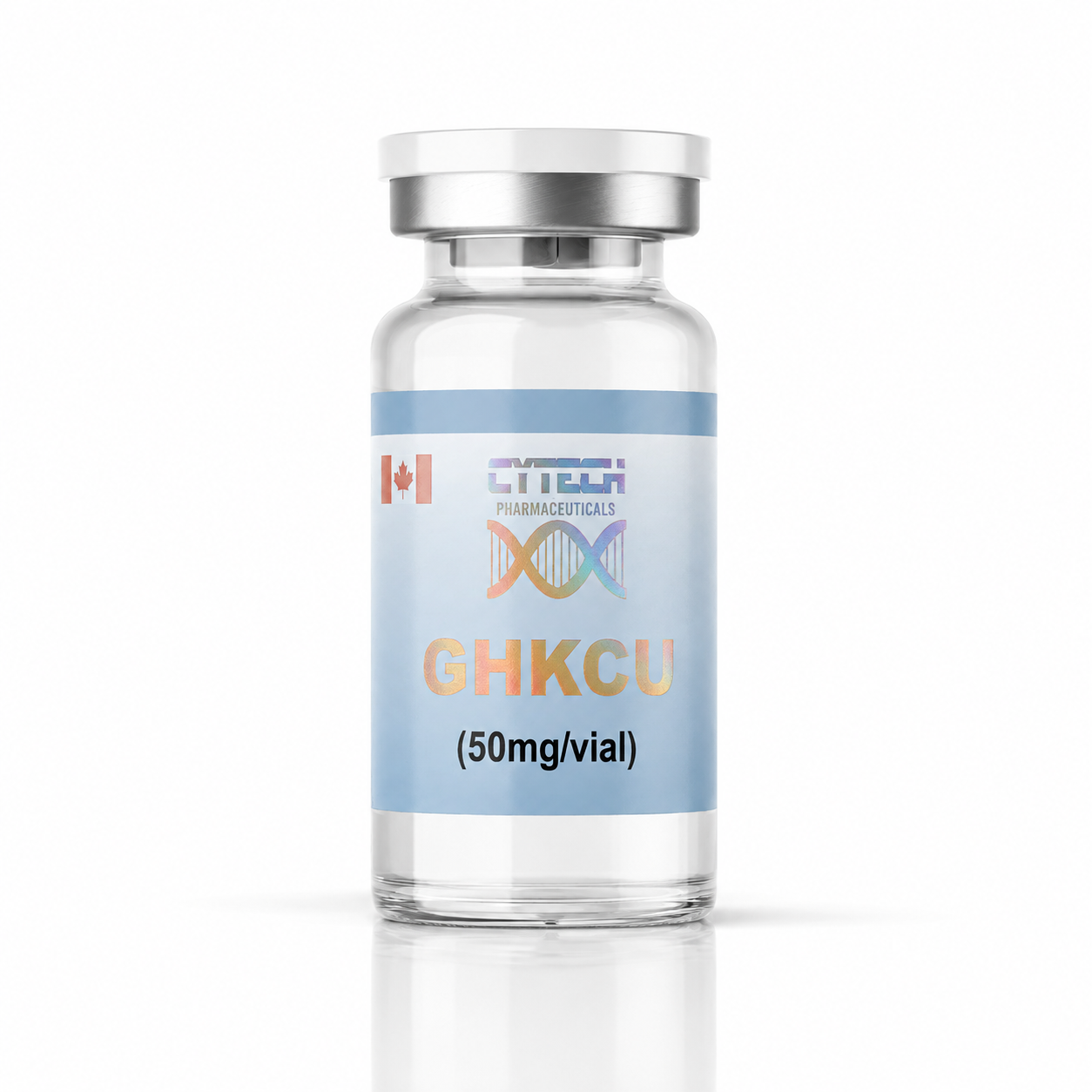
GHK-Cu, also known as Copper Tripeptide-1, is a naturally occurring copper-binding peptide composed of three amino acids: glycine, histidine, and lysine. GHK-Cu has attracted significant interest in peptide and skin research because of its potential involvement in collagen production, tissue remodeling, skin repair, and cellular regeneration. Research has also examined its effects on fibroblast activity, extracellular matrix production, and inflammatory pathways.
How it works?
GHK-Cu works through its interaction with copper and various biological pathways involved in tissue maintenance and repair. Research suggests that the peptide may influence collagen and glycosaminoglycan synthesis while supporting fibroblast activity and extracellular matrix remodeling. These properties have made GHK-Cu an area of interest in research involving skin regeneration, wound healing, and age-related changes in skin structure.
How is GHK-Cu Used?
GHK-Cu has been investigated in different formulations, particularly topical cosmetic and research applications. Because peptide stability, skin penetration, formulation, and route of administration can substantially affect its activity, the appropriate use depends on the specific formulation and research protocol. GHK-Cu should not be assumed to have the same effects across different routes of administration.
Benefits:
Skin Support: GHK-Cu has been studied for its potential to support collagen production, skin structure, firmness, elasticity, and overall skin quality.
Collagen & Extracellular Matrix Research: Studies have investigated GHK-Cu’s influence on collagen, glycosaminoglycans, fibroblasts, and other components of the extracellular matrix involved in maintaining healthy tissue structure.
Skin Repair & Regeneration: Preclinical research has examined GHK-Cu in relation to wound contraction, tissue repair, angiogenesis, and remodeling, making it an important peptide in regenerative research.
Skin Appearance: GHK-Cu is widely researched and used in topical cosmetic formulations intended to support the appearance of aging skin, including texture, firmness, and the appearance of fine lines. However, available clinical evidence remains limited and further research is needed.
Research Considerations:
GHK-Cu has demonstrated interesting biological activity in cellular and animal studies, but results from preclinical research should not automatically be interpreted as proven clinical benefits in humans. Human studies remain relatively limited, particularly for injectable applications. Formulation, stability, absorption, and delivery method can also influence its effectiveness.
Dosage:
There is no universally established or approved dosing regimen for GHK-Cu for general human use. Any research application should follow the specifications of the relevant study or laboratory protocol rather than relying on generalized dosing recommendations.
Conclusions:
GHK-Cu is a well-studied copper-binding tripeptide with considerable research interest in skin regeneration, collagen synthesis, extracellular matrix remodeling, and tissue repair. Its potential applications in skin and regenerative research continue to be investigated, although additional high-quality human clinical research is needed to establish its effectiveness and safety for specific therapeutic applications.
GHK-Cu is intended for research purposes and should not be considered a treatment or cure for any medical condition.

Briggs –
Good workmanship and quick delivery made me happy with my order.
G.R. –
I wanted to be fair before deciding whether it was making a difference. After using it regularly, I noticed improvement that made me feel encouraged.
Connor D. –
I wasn’t sure which option to choose at first, but the reasonable price helped make my decision easier.
amaris –
For me, a satisfying purchase is one that leaves me feeling comfortable with my decision long after placing the order. This experience has given me that feeling so far, and I’m happy that I chose to give it a chance.
Ledger –
I gave it enough time to see how it worked for me. The gradual improvement was encouraging, and I felt better about continuing my routine.
NJ –
I’m happy with the purchase because the product offered good value for the price. The package arrived securely, and there were no unexpected surprises when I opened it. Everything was handled efficiently, and the shipping time was better than expected.
verna h. –
The price here is consistently competitive without any reduction in product quality or service standards. Fast delivery and great support round out an experience that leaves customers fully and happily satisfied.
algernon –
The product arrived overnight and is completely genuine. Support was accommodating and the price was excellent. Very satisfied.
Petronilda –
I love this store. Authentic products, fair prices, fast delivery, and excellent support. Satisfaction is guaranteed here every time.
Elsworth G. –
Support helped me choose the right product for my needs and it arrived the very next day. Completely authentic and priced very affordably. This store left me feeling genuinely valued and completely satisfied.
leonora –
My concern was resolved without unnecessary back-and-forth or confusion.
Wickham –
My opinion changed gradually along with the improvement. I wasn’t convinced at first, but after regular use, I started seeing enough difference to feel positive about it.
nathaniel –
I had a certain budget in mind, and this purchase stayed within it. The product also looked genuine when received.
A.B. –
I’m pleased with the choice I made here. Everything worked out smoothly, and I’d recommend it to anyone who is thinking about trying it.
Trevor –
This ended up being a purchase I feel good about. I’ve enjoyed the experience so far and would recommend it based on what I’ve personally seen.
natalie b. –
They were quick to reply and gave me a clear answer.
sophia r. –
At first, I wasn’t sure whether anything was changing, but after regular use, I could finally see a noticeable improvement compared with when I started.
brady –
I’m glad I came across this store. The product arrived sooner than expected and was exactly what I wanted. It looked genuine, and the price was much more affordable than I expected.
NK –
I gave it a proper chance before forming an opinion, and I’m glad I did because the difference became easier to notice with time.
Ethan H. –
My item came in perfect shape at a price I loved. Totally real, and the team was lovely throughout. Shoppers leave this shop fully content.
dante m. –
The improvement didn’t happen overnight, but I could gradually tell things were getting better. That steady progress is what convinced me to continue.
cameron –
I had a pleasant surprise after trying it for myself. The experience was positive, and I’d recommend it rather than relying only on expectations.
Travis –
This was a pleasant surprise. The item feels much better made than expected, and the shipping was quick and reliable.
AR –
The price was affordable for me, and I was happy with how authentic everything looked.
Jeremiah –
Everything turned out nicely with my order. I’ve been enjoying it so far, and I’d recommend it to anyone who is considering trying it.
I.K. –
The team handled my question with real attention and gave me a complete answer. My order came quickly, is entirely authentic, and outperformed what I expected. Great shop.
Henley –
This looks genuine from what I can see. The details are clean, and the item has a sturdy quality that I really like.
Gregory –
The quality is honestly better than I expected. It has an authentic appearance and feels solid enough for everyday use.
F.M. –
I was pleasantly surprised when I realized that things had gradually improved. The difference wasn’t obvious at first, but after enough time, it became much easier to recognize.
Eugenia –
I like the way this feels in person. The quality is excellent, and the quick delivery was definitely appreciated.
Donald R. –
I had a pleasant experience ordering from this store. The product arrived earlier than expected and looked authentic right away. The cost was affordable, and everything about the transaction felt dependable.
C.T. –
This turned out better than I expected. I’ve been happy with my experience so far, and I’d definitely suggest it to someone looking for something similar.
Isaias C. –
I gave it enough time to become part of my routine, and that’s when I started noticing the difference. The improvement has been steady and easier to recognize.
K.P. –
The quality was a pleasant surprise. It feels durable in person, and I was happy with how quickly everything was delivered.
loren –
The whole experience left me with a good impression. I’m pleased with the result and would recommend it to anyone considering the same purchase.
G.F. –
The service rep was kind, efficient, and clearly cared about my happiness. It came quickly, is 100% real, and was priced very fairly. I couldn’t want more.
beatrice –
I’m happy I took the chance on this. The experience was straightforward, and the result was exactly the kind of satisfaction I was hoping for.
Laurence H. –
I didn’t have particularly high expectations, so I was pleasantly surprised by the overall experience. It left me feeling happy with my purchase.
C.F. –
This arrived earlier than I was expecting, which was great. The item feels well-made and durable, so I’m happy with it.
osborne –
My first impression was already good, but using it made me appreciate the purchase even more. I’m definitely happy with how things turned out.
Percival D. –
I’ve been placing orders here for nearly a year, and the experience hasn’t slipped once. Fast shipping, careful packaging, and affordable prices are the three pillars of this store, and they uphold all three with every single transaction. My trust in them is fully cemented.
R.K. –
I wanted something that fit my budget, and this ended up being a good option for me.
julianne f. –
This seemed like a fair deal, and the product looked authentic once I opened the package.
Casimir –
Support helped me resolve a delivery question quickly and courteously. The product arrived the next day, authentic and effective. This store treats customers right.
G.P. –
I started out unsure about what I would experience, but continuing with it changed my perspective. The improvement became more noticeable over time and made the routine feel worthwhile.
leonard –
I like the way this product feels. It seems sturdy and made to last, and my package arrived sooner than the estimated date.
Rutherford C. –
The whole experience was better than I imagined. I ordered without expecting too much, so seeing how satisfied I became was a nice surprise.
Hannah M. –
I didn’t expect to notice much at first, but after using it consistently, I started seeing changes that were easier to appreciate. The improvement has been encouraging overall.
FC –
I gave myself enough time to see whether it would make a noticeable difference. The gradual improvement eventually became clear, and I’m glad I didn’t make a quick judgment.
garrett v. –
I started without knowing exactly what to expect, so I tried to keep an open mind. After using it regularly, I noticed a positive change that surprised me.
Fiona –
This store turned out to be a reliable choice. My package arrived without delays, and the product looked exactly like the listing. It appeared authentic, and the price was reasonable. I’m very happy with how the purchase went.
Isidore M. –
The overall experience was better than I imagined. I’m satisfied with my purchase and really happy with the result.
H.F. –
I was pleasantly surprised by the value. It was affordable and appeared to be the genuine product.
phineas c. –
I’m glad I didn’t hesitate to order. Everything turned out well, and I’m really pleased with the experience.
Gideon L. –
The quality is better than I expected. It feels reliable and durable, and I was glad to receive it earlier than planned.
M.G. –
At the beginning, I was mostly curious to see whether I would notice anything different. After staying with it, I started recognizing improvements that were much more obvious.
dominique r. –
The price worked for my budget, and I liked that the product didn’t look like a cheap imitation.
Enoch H. –
I wasn’t looking to overspend, so the reasonable price was appealing, and the product seemed legitimate too.
F.C. –
I’m pleased with the overall purchase. The item feels durable and nicely constructed, and the fast delivery made things even better.
casper d. –
I’m glad I took the chance on this. The experience was enjoyable, and I’m really happy with the outcome.
D.L. –
The cost was lower than some alternatives I considered, which I appreciated. The product still looked genuine and well presented.
cameron p. –
I’m glad I took the time to compare prices. This option was affordable, and the product quality seemed consistent with the listing.
Anderson J. –
A purchase that ended up exceeding my expectations. I’m very satisfied with everything and happy with my decision.
H.M. –
Everything arrived quickly and without any problems. The product quality is noticeable right away, and it feels like something made to handle regular use.
jacob f. –
This was a great experience from beginning to end. The product arrived promptly, the packaging was secure, and the quality matched the description. It looked genuine, and the price was fair.
Marshall T. –
I was happy with how quickly the package arrived. After opening it, the quality immediately stood out and the product felt sturdy in my hands. Marshall T.
Faye –
Really happy with how this turned out. I got exactly the kind of experience I wanted.
JG –
The quality is noticeable as soon as you handle it. It feels strong and carefully made, while shipping was quick and hassle-free.
evan r. –
I checked several prices before ordering, and this one offered good value. The product also appeared genuine when received.
Demi –
The shipping notification came through within two hours of placing my order. Two days later, a perfectly packed box was at my door. For the price I paid, this level of service is extraordinary. I trust this store completely and will be back regularly.
Colton –
Happy with everything so far. The item feels durable and reliable, and the package arrived much faster than I originally expected.
C.K. –
I’m honestly impressed with the whole experience. Glad I decided to place an order.
Lennox R. –
I wasn’t completely sure what to expect when I first tried this, but the results have been encouraging. The product has worked well for my needs, and I’m pleased with the improvement.
D.T. –
Great value overall, with an affordable price and quality that feels reassuringly genuine.
rosie –
The product I received was brand new, sealed, and 100% original. Zero complaints.
Fletcher M. –
Affordable pricing made this an easy choice for my budget, and the product appeared authentic and consistent with what was advertised. Very satisfied with the value.
C.J. –
This store earned my trust after just one order. Everything arrived quickly and securely, and the product looked exactly as it should. I liked that the price was affordable without making the product seem cheaply made. The experience was simple, pleasant, and completely hassle-free.
vivienne –
No nonsense, no gimmicks, just authentic products at honest prices. My kind of store.
Graham P. –
The price was reasonable compared with other options I considered, and the product quality was reassuring. It looked authentic when received and met my expectations.
H.S. –
I liked the balance between affordability and quality. The product arrived looking genuine and well presented, which made the purchase feel much more worthwhile.
callie –
I’m quite impressed with the quality of service here. My order was processed smoothly, shipping was fast, and the package arrived in excellent condition. The product looked authentic and matched what I ordered. The reasonable price was another plus, making this a purchase I’m very happy with.
katie –
Easy item to add to an existing order without cart confusion, astonishing me with how effortless buying was.
Jonathan P. –
Everything was exactly where it should be, offering top-shelf build quality, solid materials, and heavy durability.
kaden –
Intact packaging made a reassuring first impression, proving this certified seller ships 100% real authentic gear.
F.B. –
Accurate order and carefully arranged contents, confirming I received 100% genuine authentic items.
Hayes M. –
My uncertainty eased once tracking page began showing regular movement, bringing package straight to my door without shipping delays.
kellan –
I appreciated receiving clear instructions after submitting payment, as customer service representatives guided me right through.
Bennett K. –
From an ordering perspective, service was accurate, transparent, and reasonably prompt, as helpful customer support kept me fully informed.
W.O. –
Overall, a comfortable first experience, as friendly customer support guided me right through.
Leander M. –
My hesitation faded almost immediately, as super cheap prices saved me tons of money on this order.
Godfrey R. –
Another dependable purchase, offering top-shelf build quality, solid craftsmanship, and heavy durability that easily stands up to daily use.
oberon –
Smooth all around, astonishing me with how effortless buying was.
Everett –
The overall experience left a strong impression on me, completely blowing me away with how remarkably awesome everything turned out.
S.F. –
Everything happened according to the estimated timeline, arriving super fast straight to my doorstep.
rachel –
Dependable service continues to impress me, providing top-shelf build quality and exceptional durability with every single order.
Alexander J. –
I didn’t have any issues with my order, leaving me completely satisfied with this purchase.
isabelle –
I had a very good experience with this purchase. The product was exactly what I ordered, and it arrived much sooner than expected. The price was also reasonable, which made the overall experience even better.
emma –
The service has been very reliable, delivering my package super fast without any annoying delays.
James W. –
Every step felt organized and well communicated, as their friendly customer service agents guided me right through.
P.S. –
Packaging quality really stood out, proving this store sells 100% genuine and verified authentic gear.
C.E. –
Professional presentation made a positive first impression and gave the entire purchase a more organized, dependable feel from the beginning.
ansel –
Fast processing and dependable updates kept everything easy to follow without creating unnecessary stress during the entire ordering process.
august –
Fast confirmation combined with dependable delivery made the whole process convenient and easy to feel confident about.
Leander F. –
Everything came together exactly as expected, creating a satisfying experience that felt smooth and well organized from beginning to end.
P.C. –
Everything about the experience was positive, from placing the order to receiving it, and there were no major issues along the way.
A.P. –
Results took some time to become noticeable, but regular use made a clear difference. The gradual improvement made the overall experience feel more satisfying.
Edmund K. –
The price was a pleasant surprise, especially compared with how much similar products usually cost. It also looked legitimate when it arrived, which made the purchase feel worthwhile.
Benjamin –
Genuinely satisfied with the quick shipping. Prices are cheap and quality is completely authentic here.
B.D. –
Great store with very affordable prices. The products are 100% authentic and the quality is brilliant. Delivery was fast, and customer support was super helpful throughout the entire process.
Matthew –
Genuinely amazed by the fast delivery and great quality. Customer service was super helpful today.
Thomas R. –
Finding authentic products at these affordable rates is honestly amazing. Shipping was fast, and customer care responded to my questions immediately. Highly recommend!
Eustace C. –
Easy listing to review. The main details were clear, and I didn’t have to spend much time looking around.
P.M. –
The overall interface was pretty straightforward. I could go from the listing to my cart without unnecessary pages, and the final order summary gave me a good chance to double-check everything before continuing.
arlen –
The website kept things simple and made it easy to review my selected item before moving forward.
Anthony G. –
The price was one of the things I liked most about the experience. It felt reasonable and made the overall purchase easier for me.
T.M. –
The entire shopping process felt organized from beginning to end. The website was easy to navigate, checkout was quick, updates arrived when expected, and the package reached me in good condition.
michael –
The website was easy to use, payment went through smoothly, and the communication throughout the process was clear and helpful.
Kevin B. –
Checkout was easy to complete, and the order updates came through at reasonable times. I always had enough information to follow along.
nicholas –
The packaging did a good job protecting everything during transport. Nothing arrived damaged or out of place, which I appreciated.
Christopher D. –
I’m usually pretty picky about packaging because I think it can tell you a lot about how an order was handled. This one arrived in good shape, and everything inside was arranged securely. It was clear that some care had gone into preparing the package, and that left a positive impression.
E.S. –
Everything was handled very efficiently. The process was quick, simple, and didn’t take more time than necessary.
william h. –
I’ve come to expect a consistent experience from this store, and this order was handled just as smoothly as the previous ones.
parker –
The mobile checkout worked flawlessly, and payment was processed immediately. It was simple, quick, and easy from start to finish.
E.R. –
Overall, I’m very happy with my experience. Everything went smoothly, and I was pleased with how easy the whole process was.
maud –
Discreet packaging was important to me, and they handled that part very well.
conrad –
I expected to contact customer support, but the order went smoothly enough that I never needed to.
sawyer –
I had a really good experience overall. Everything felt easy and straightforward, and I’m completely satisfied with the decision I made.
K.J. –
The packaging looked neat and secure when the order arrived. I also appreciated that the exterior didn’t unnecessarily reveal details about the contents.
Axel –
I spent time comparing different options and prices before ordering. This one offered a good balance between affordability, quality, and an authentic-looking product.
C.W. –
The results have been better than I expected, which really impressed me.
violet –
The experience was smooth and enjoyable, leaving me genuinely satisfied with my decision.
Roman –
Everything went smoothly with this purchase. The product feels solid and well-made, and shipping was surprisingly quick.
duncan –
I was honestly skeptical at first because I thought copper peptides were a little overhyped. I ended up being pleasantly surprised. My skin seemed less irritated within the first couple of weeks, and by the fourth week, I could see a noticeable improvement in how smooth and healthy it looked.
norwood –
I honestly have no complaints. The order was processed quickly, packed securely, and delivered within the expected timeframe.
Euston –
My experience from ordering to delivery was smooth. The package was cleanly packed, secure, and arrived without any problems.
A.C. –
The product arrived just as I expected, and the reasonable price made the purchase even more worthwhile.
milton –
From placing the order to receiving it, everything went smoothly. The package was secure, discreet, and arrived right when it was supposed to.
edison –
The ordering process was really easy, and my package arrived safely packed. Everything was just as expected.
Corbett H. –
The entire process was easy and hassle-free. The price was fair, shipping was quick, and everything arrived as it should.
B.L. –
I’ve been applying it topically for about a month, and my skin texture has completely transformed. My pores look tighter, my tone is more even, and the fine lines around my eyes are noticeably softer. I wasn’t expecting to see a difference this quickly, but I’m really happy with the results.
colm –
I liked how smoothly everything went. The package was well prepared, and the delivery time was better than I expected.
darian –
I’m very happy with the overall experience. It was easy to place the order, delivery didn’t take long, and my package arrived safely.
Whitaker H. –
Nothing complicated about the purchase at all. The price was good, shipping was quick, and the overall presentation was professional.
A.G. –
I’ve been using it for around four months now, and the improvement in my skin’s overall appearance has been really noticeable. The texture, tone, hydration, and firmness all seem better than before. I’m very happy with the progress so far.
elaine –
My package showed up much earlier than I had anticipated. Everything inside was in excellent condition and packed securely.
hart –
Everything arrived just as expected, with enough protection to keep the product safe during transit. I’d definitely consider ordering again.
phoebe –
I’ve been using it around my eyes for crow’s feet, and I’m really happy with what I’ve seen. The lines look softer, the skin feels firmer, and I generally look more rested. It’s one of the better topical products I’ve used in that area.
M.C. –
Everything was in perfect condition when it arrived. You can tell some thought went into making sure the package was protected during transit.