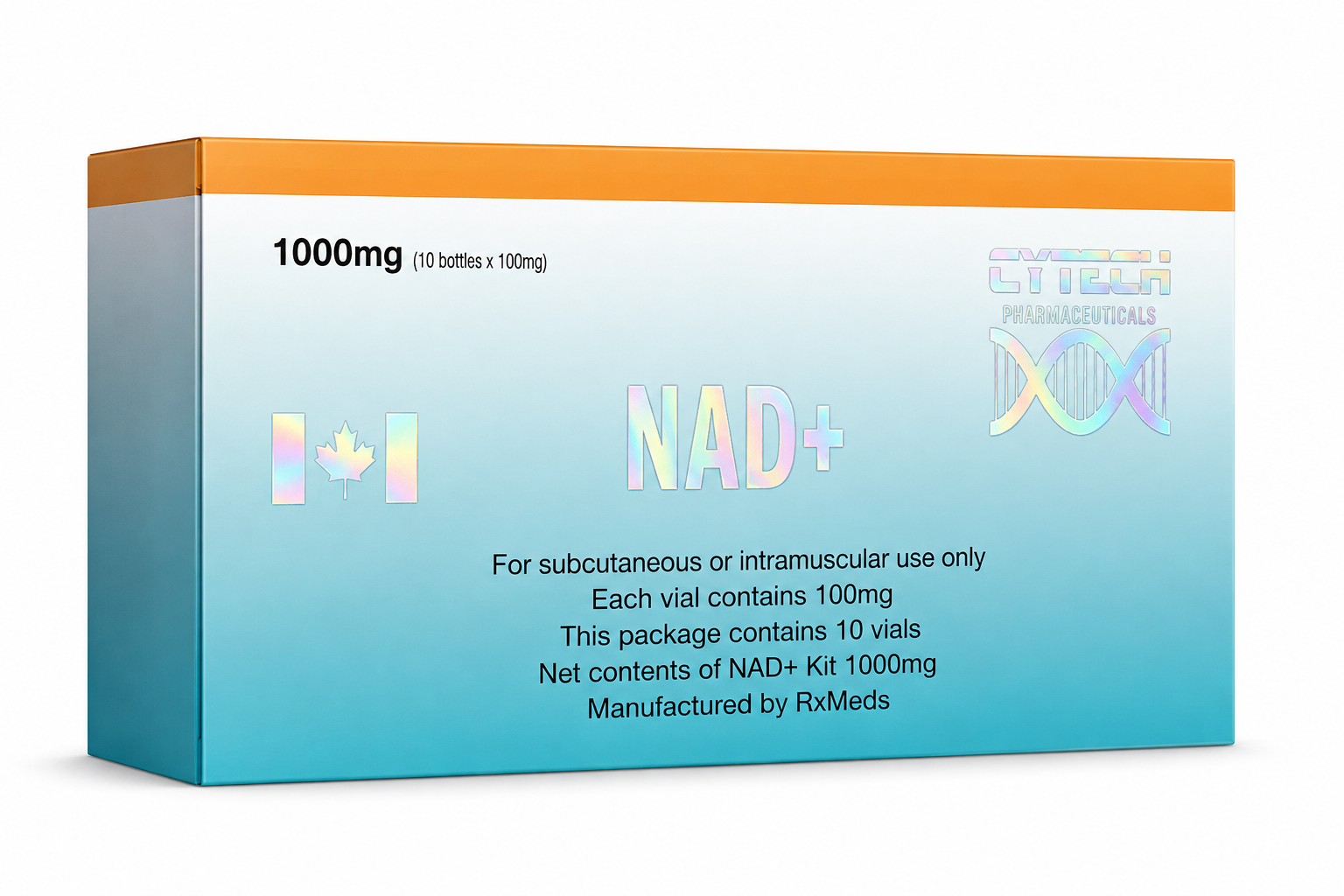
NAD+, or nicotinamide adenine dinucleotide, is an essential coenzyme found throughout the body’s cells. It plays a fundamental role in cellular energy production and serves as a critical electron carrier in oxidation-reduction reactions. NAD+ is also involved in signaling pathways related to DNA repair, gene regulation, calcium signaling, and cellular stress responses.
NAD+ exists primarily in two forms: oxidized NAD+ and reduced NADH. The ability of NAD+ to cycle between these forms allows cells to transfer electrons during metabolic reactions and efficiently generate energy through pathways such as glycolysis, the citric acid cycle, and oxidative phosphorylation.
How does NAD+ work?
NAD+ functions as an essential cofactor for numerous enzymes and metabolic pathways. During energy metabolism, NAD+ accepts electrons to form NADH, which subsequently transfers those electrons to the mitochondrial electron-transport chain. This process contributes to the production of ATP, the primary energy currency of cells.
NAD+ also serves as a substrate for several important enzyme families, including sirtuins and poly(ADP-ribose) polymerases (PARPs). These enzymes participate in processes involving cellular stress responses, DNA repair, chromatin regulation, and metabolic signaling. (pubmed.ncbi.nlm.nih.gov)
How is NAD+ Used?
NAD+ is investigated in several forms and delivery approaches, including intravenous administration and oral supplementation with NAD+ precursors such as nicotinamide riboside (NR) and nicotinamide mononucleotide (NMN).
Research has focused on whether increasing NAD+ availability can influence cellular metabolism, mitochondrial function, and physiological processes associated with aging. However, the effects depend substantially on the specific NAD+-raising strategy, tissue, baseline NAD+ status, and individual biological factors.
Direct administration of NAD+ and administration of NAD+ precursors should not be considered interchangeable approaches, as they involve different absorption, metabolism, and tissue-distribution characteristics.
Benefits:
Cellular Energy Production: NAD+ is essential for converting nutrients into cellular energy. It participates in glycolysis, the citric acid cycle, and mitochondrial oxidative phosphorylation, making it fundamental to normal cellular metabolism.
Mitochondrial Function: NAD+ availability influences mitochondrial energy metabolism and the activity of several enzymes involved in maintaining mitochondrial homeostasis. Research continues to investigate how changes in NAD+ levels affect mitochondrial function during aging and metabolic stress. (pubmed.ncbi.nlm.nih.gov)
DNA Repair Research: NAD+ serves as a substrate for PARP enzymes involved in DNA damage responses and repair. Cellular NAD+ availability can therefore influence the capacity of cells to respond to certain forms of DNA damage. (pubmed.ncbi.nlm.nih.gov)
Cellular Stress & Aging Research: NAD+ levels and NAD+-dependent signaling pathways have been investigated extensively in connection with aging and cellular stress. Studies in experimental models have reported age-related changes in NAD+ metabolism, contributing to interest in NAD+ restoration strategies. (pubmed.ncbi.nlm.nih.gov)
Metabolic Research: NAD+ is closely connected to glucose, fatty-acid, and amino-acid metabolism. Research has investigated whether modifying NAD+ metabolism can influence metabolic health and insulin-related pathways. (pubmed.ncbi.nlm.nih.gov)
Sirtuin Signaling: NAD+ is required by sirtuin enzymes, which participate in cellular metabolism, stress responses, and gene regulation. This relationship has made NAD+ biology an important area of research into metabolic health and age-associated cellular changes. (pubmed.ncbi.nlm.nih.gov)
Research Considerations:
Although NAD+ biology is well established, this does not mean that increasing NAD+ levels automatically produces clinically meaningful improvements in health or longevity.
Aging has been associated with alterations in NAD+ metabolism in several tissues, and numerous preclinical studies have produced promising findings. However, human trials of NAD+-raising interventions have produced mixed results, and evidence for broad anti-aging, cognitive, metabolic, or performance benefits remains insufficient to support many of the claims commonly made in commercial marketing. (pubmed.ncbi.nlm.nih.gov)
It is also important to distinguish NAD+ itself from NAD+ precursors such as NR and NMN. Human clinical research has more commonly examined precursor supplementation than direct NAD+ administration, meaning findings from one approach should not automatically be applied to another.
Dosage:
There is no universally established dosage regimen for NAD+ for general wellness, longevity, or anti-aging purposes. Administration protocols vary according to the specific formulation, route, and research objective. Direct NAD+ administration should not be equated with the dosing of NAD+ precursors such as NR or NMN.
Conclusions:
NAD+ is a fundamental cellular coenzyme with an essential role in energy metabolism, mitochondrial function, redox balance, DNA repair, and cellular signaling. Its central position in these biological pathways has made NAD+ metabolism an important area of research, particularly in relation to aging and metabolic health. (pubmed.ncbi.nlm.nih.gov)
Research into NAD+ restoration and NAD+-boosting strategies continues to expand, with promising findings in several experimental models. Nevertheless, additional high-quality human research is needed to determine which interventions can produce meaningful clinical benefits and in which populations.
NAD+ is presented here for research and educational purposes and should not be considered a treatment or cure for any medical condition.
Reviews
There are no reviews yet.